
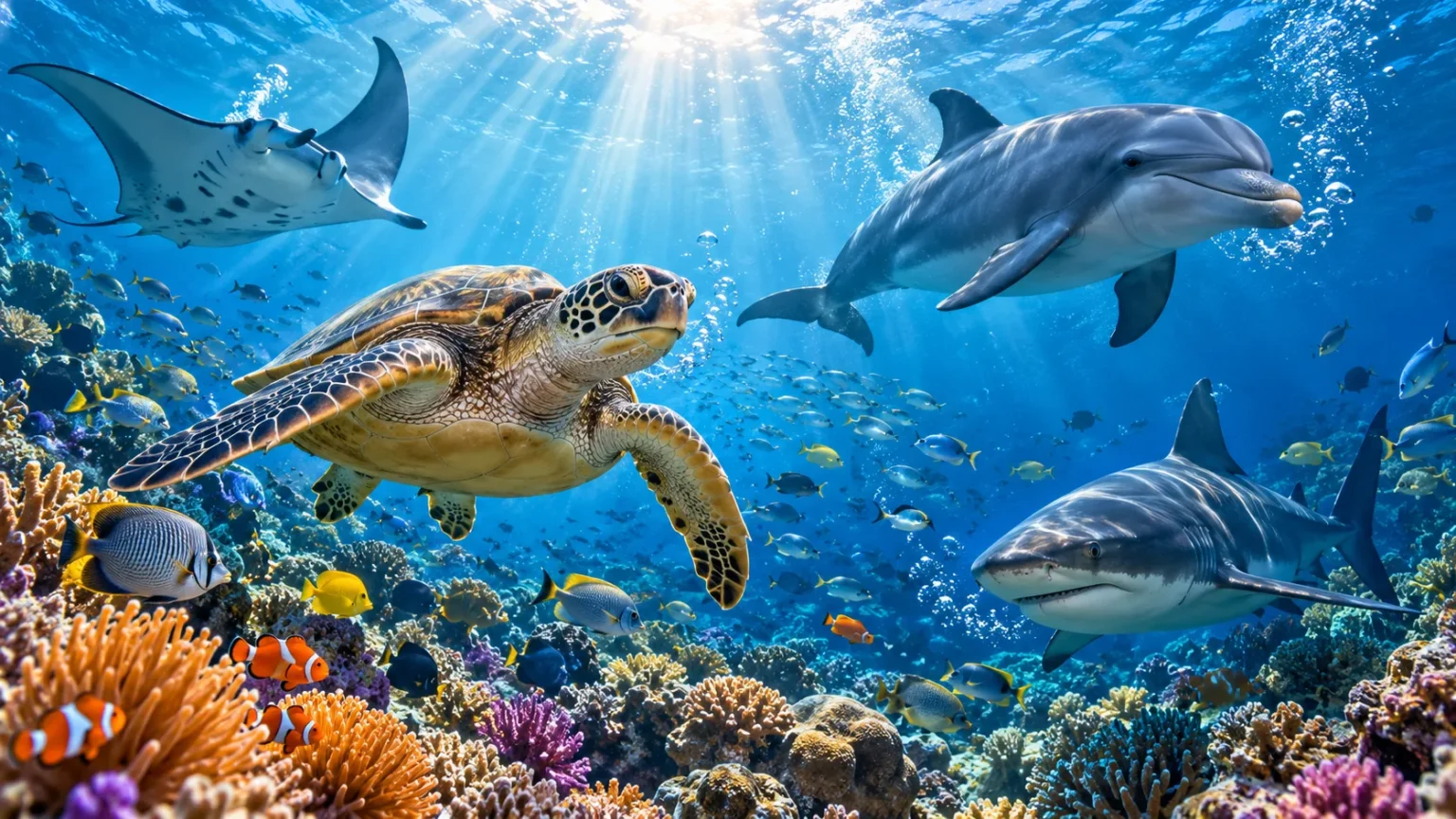
Water is essential for nearly every living organism on Earth, including animals that spend their entire lives swimming in oceans, rivers, and lakes. However, an interesting question often comes to mind when observing fish, dolphins, sharks, and other underwater creatures: does aquatic life drink water? Since these animals are already surrounded by water, their drinking habits may seem confusing.
The answer depends on the species, habitat, and how each animal maintains water and salt levels inside its body. Some aquatic animals regularly swallow water, while others absorb it through their bodies or obtain moisture from food. This guide explains how aquatic animals drink water, why freshwater and saltwater species behave differently, and how their bodies maintain the balance needed for survival.
Does Aquatic Life Drink Water?
Yes, many aquatic animals drink water, but not every species needs to swallow it to stay hydrated. Their drinking behavior depends on the environment they inhabit and how their bodies regulate internal fluids. Saltwater fish, freshwater fish, marine mammals, and aquatic invertebrates have developed different ways to maintain the water balance necessary for survival.
Most marine bony fish regularly swallow seawater because they naturally lose water to their salty surroundings. Freshwater fish generally have the opposite problem because water continually enters their bodies through osmosis. As a result, freshwater fish usually drink very little and instead remove excess water through their kidneys.
Other aquatic animals obtain water through food, metabolic processes, or direct absorption across body surfaces. Dolphins and whales, for example, receive much of their water from prey and the water generated during metabolism. These differences demonstrate that living underwater does not eliminate the need to regulate hydration and maintain appropriate internal conditions.
Why Do Saltwater Fish Drink Seawater?
Saltwater fish live in oceans containing much higher concentrations of dissolved salts than their internal body fluids. Because of this difference, water naturally moves out of their bodies through permeable surfaces, particularly the gills. Without suitable biological adaptations, this continuous water loss could interfere with normal body functions and create serious physiological problems.
Most marine bony fish compensate for this water loss by regularly swallowing seawater. Their digestive systems absorb water while specialized cells and organs help manage the additional salts entering their bodies. This process allows them to obtain the moisture they need while maintaining suitable concentrations of dissolved substances within their tissues.
Excess salts are mainly removed through specialized cells located in the gills, while the kidneys contribute to maintaining internal balance. Marine bony fish generally produce relatively small amounts of urine to conserve water. These adaptations make it possible for them to survive in an environment where drinking water introduces additional salt into the body.
How Do Freshwater Fish Get the Water They Need?
Freshwater fish live in rivers, lakes, and ponds where the surrounding water contains fewer dissolved salts than their internal body fluids. As a result, water naturally enters their bodies through permeable surfaces, especially across the gills. This means many freshwater fish receive sufficient water without needing to drink large amounts.
Because freshwater constantly enters their bodies, these fish must prevent excess water from disrupting their internal balance. Their kidneys produce relatively large quantities of dilute urine, allowing unwanted water to leave the body. This process helps maintain appropriate fluid levels while reducing the loss of important dissolved substances.
Freshwater fish must also replace salts that can be lost to the surrounding environment. Specialized cells in their gills actively absorb necessary ions, while their food supplies additional nutrients and minerals. Together, these mechanisms help freshwater fish survive without relying on the frequent drinking behavior commonly observed in marine bony fish.
How Osmosis Helps Aquatic Animals Maintain Water Balance
Osmosis is the movement of water across a selectively permeable membrane toward the side with a higher effective concentration of dissolved substances. This natural process plays an important role in maintaining fluid balance inside living organisms. For aquatic animals, the difference between their internal fluids and surrounding water influences how water enters or leaves the body.
In freshwater environments, many fish experience a continuous inward movement of water because their body fluids contain more dissolved substances than the surrounding water. In seawater, most marine bony fish experience the opposite effect and naturally lose water. These contrasting conditions explain why freshwater and saltwater fish require different hydration strategies.
The biological process of controlling water and dissolved salt concentrations is called osmoregulation. Aquatic animals rely on organs such as kidneys, gills, and specialized salt-excreting glands to maintain this balance. Effective osmoregulation supports normal cellular activity, metabolism, and survival across environments with different salinity levels.
Do Sharks and Rays Drink Water Like Other Fish?
Sharks and rays regulate water differently from most marine bony fish because their body fluids contain relatively high concentrations of urea and other dissolved compounds. These substances help maintain an internal osmotic concentration close to that of surrounding seawater. This unusual adaptation reduces the tendency of their bodies to lose water.
Many marine sharks and rays maintain body fluids that are slightly more concentrated than seawater, allowing water to enter through osmosis. Consequently, they generally do not need to drink seawater in the same way as marine bony fish. However, drinking behavior varies among species and environmental conditions, so the distinction is not absolute.
Sharks and rays also possess specialized structures that help remove excess salts while maintaining appropriate internal chemistry. In many species, the rectal gland plays an important role in eliminating excess sodium chloride. These adaptations demonstrate how different groups of fish evolved distinct solutions to the challenges of living in salty marine environments.
Do Whales and Dolphins Drink Ocean Water?
Whales and dolphins are marine mammals that breathe air through lungs instead of extracting oxygen from water through gills. Their hydration requirements differ from those of most marine fish because they obtain substantial amounts of water through their diet. Fish, squid, and other prey contain moisture that contributes to their daily water needs.
Marine mammals also generate metabolic water when their bodies process nutrients from food. This internal water production contributes to hydration alongside moisture obtained directly from prey. Although occasional seawater ingestion may occur, whales and dolphins are not generally thought to depend on routinely drinking seawater to maintain adequate hydration.
Their kidneys are adapted to managing salt and water balance in marine environments. These organs help remove waste products and regulate fluid concentrations without requiring the same drinking strategy used by marine bony fish. The ability to obtain water from food illustrates how marine mammals can remain hydrated while living entirely in salty ocean environments.
Do Sea Turtles and Seabirds Drink Saltwater?
Sea turtles are marine reptiles that can swallow seawater while feeding or moving through their ocean habitats. Unlike many freshwater fish, they face challenges associated with maintaining hydration in a salty environment. Their bodies contain specialized adaptations that help manage excess salt while allowing them to survive in marine conditions.
One remarkable adaptation involves salt glands located near the eyes of sea turtles. These glands release concentrated salty fluid, helping remove excess salts from the body. The process can sometimes resemble tears, but its primary purpose is regulating salt levels rather than expressing emotions.
Some seabirds, including certain gulls and albatrosses, also possess specialized salt glands that allow them to drink seawater when necessary. These glands remove excess salt and release concentrated fluid through passages associated with the beak. Such adaptations make it possible for particular bird species to obtain water while spending extended periods in marine environments.
How Do Jellyfish, Octopuses, and Other Invertebrates Get Water?
Aquatic invertebrates display a wide variety of methods for managing water because their body structures differ considerably. Jellyfish, for example, have bodies containing a very high proportion of water and live in close contact with their surroundings. Water and dissolved substances move across their tissues through biological processes that help maintain internal conditions.
Many marine invertebrates have internal fluids whose osmotic concentration is similar to that of seawater. This reduces major differences in water concentration between their bodies and the surrounding environment. Rather than drinking like terrestrial mammals, they may exchange water across body surfaces and through other normal physiological processes.
Octopuses, crabs, and other marine invertebrates have their own mechanisms for managing fluids and dissolved salts. Some actively regulate particular ions, while others maintain internal concentrations closer to environmental conditions. Because these animals belong to different biological groups, their hydration strategies cannot be accurately explained through one universal drinking behavior.
How Do Fish Survive When Moving Between Freshwater and Saltwater?
Some fish species can move between freshwater and marine environments during different stages of their lives. Salmon are familiar examples because many species develop in freshwater, migrate into the ocean, and later return to freshwater for reproduction. These transitions expose their bodies to substantial changes in environmental salinity.
While living in freshwater, salmon generally absorb water through osmosis and remove excess fluid through dilute urine. After adapting to seawater, they begin drinking more water and adjusting the activity of their salt-regulating organs. These changes help them maintain internal balance despite the different concentrations of dissolved substances surrounding them.
This ability requires coordinated physiological adjustments involving hormones, kidneys, gills, and other body systems. Not every fish can tolerate such large changes in salinity because many species are adapted to relatively narrow environmental conditions. Fish capable of managing substantial salinity changes are called euryhaline species, and their adaptations demonstrate the flexibility of aquatic osmoregulation.
Can Aquatic Animals Become Dehydrated?
Aquatic animals can experience water imbalance even though they live in water throughout their lives. For marine bony fish, losing water to a salty environment is a constant physiological challenge. Their survival depends on drinking suitable amounts of seawater and efficiently removing the excess salts that accompany it.
Freshwater fish face a different challenge because their bodies continually gain water from their surroundings. If their osmoregulatory systems fail, excessive fluid movement can interfere with normal cellular functions. Therefore, maintaining proper hydration involves regulating both water gain and water loss rather than simply consuming large quantities of liquid.
Changes in salinity, certain diseases, and physiological disturbances can interfere with an aquatic animal’s ability to maintain fluid balance. The effects depend on the species, environmental conditions, and severity of the disruption. Understanding these differences explains why aquatic animals cannot always survive when transferred into water with unsuitable salt concentrations.
How Water Quality Affects Aquatic Animals’ Hydration
Water quality plays an important role in aquatic animal health because the surrounding environment directly influences many physiological processes. Temperature, salinity, dissolved oxygen, and chemical conditions can affect how animals function. When environmental conditions fall outside a species’ suitable range, its ability to maintain internal balance may become more difficult.
Pollution and sudden changes in water chemistry can damage sensitive tissues involved in breathing and osmoregulation. Fish gills are particularly important because they support both gas exchange and the regulation of dissolved ions. Poor environmental conditions may therefore interfere with several essential functions rather than affecting hydration alone.
For aquarium fish, maintaining suitable water conditions is more important than trying to encourage unusual drinking behavior. Different species require appropriate salinity, temperature, and water chemistry based on their natural habitats. Responsible aquarium care includes monitoring these conditions, maintaining filtration, and avoiding sudden environmental changes that could stress aquatic animals.
Conclusion
Aquatic life does drink water, but drinking behavior varies considerably between different species and environments. Most saltwater bony fish swallow seawater to compensate for water loss, while freshwater fish usually obtain water naturally through osmosis. Marine mammals, reptiles, and invertebrates rely on additional adaptations that support their hydration needs.
The way aquatic animals manage water depends on specialized biological processes involving gills, kidneys, salt glands, and other tissues. These systems help maintain appropriate fluid and mineral concentrations despite the surrounding environment. Understanding osmosis and osmoregulation explains why animals living in freshwater and seawater use different survival strategies.
Water remains essential to aquatic life even when animals are completely surrounded by it. Healthy aquatic environments support the delicate processes that allow species to maintain internal balance and survive. Learning how these organisms manage hydration offers a fascinating perspective on the diversity and complexity of life beneath the water’s surface.
Frequently Asked Questions (FAQs)
Do fish drink the water they swim in?
Some fish do, while others drink very little. Most marine bony fish regularly swallow seawater to replace lost fluids, whereas freshwater fish generally absorb water through osmosis across their body surfaces.
Do dolphins and whales drink seawater?
Whales and dolphins obtain much of their water from prey and metabolic processes. They generally do not depend on routinely drinking seawater, although incidental or occasional seawater ingestion may occur.
Why don’t freshwater fish drink much water?
Freshwater fish continually absorb water through osmosis because their body fluids contain more dissolved substances than their surroundings. Their kidneys remove excess water through relatively large amounts of dilute urine.
Can sea turtles drink saltwater safely?
Yes, sea turtles can swallow seawater and remove excess salts using specialized glands near their eyes. These adaptations help them maintain fluid and salt balance while living in marine environments.
Can aquatic animals survive without drinking water?
Some aquatic animals obtain water through osmosis, food, or metabolic processes rather than routinely swallowing it. Their survival depends on maintaining proper internal fluid balance, not necessarily on drinking water directly.