
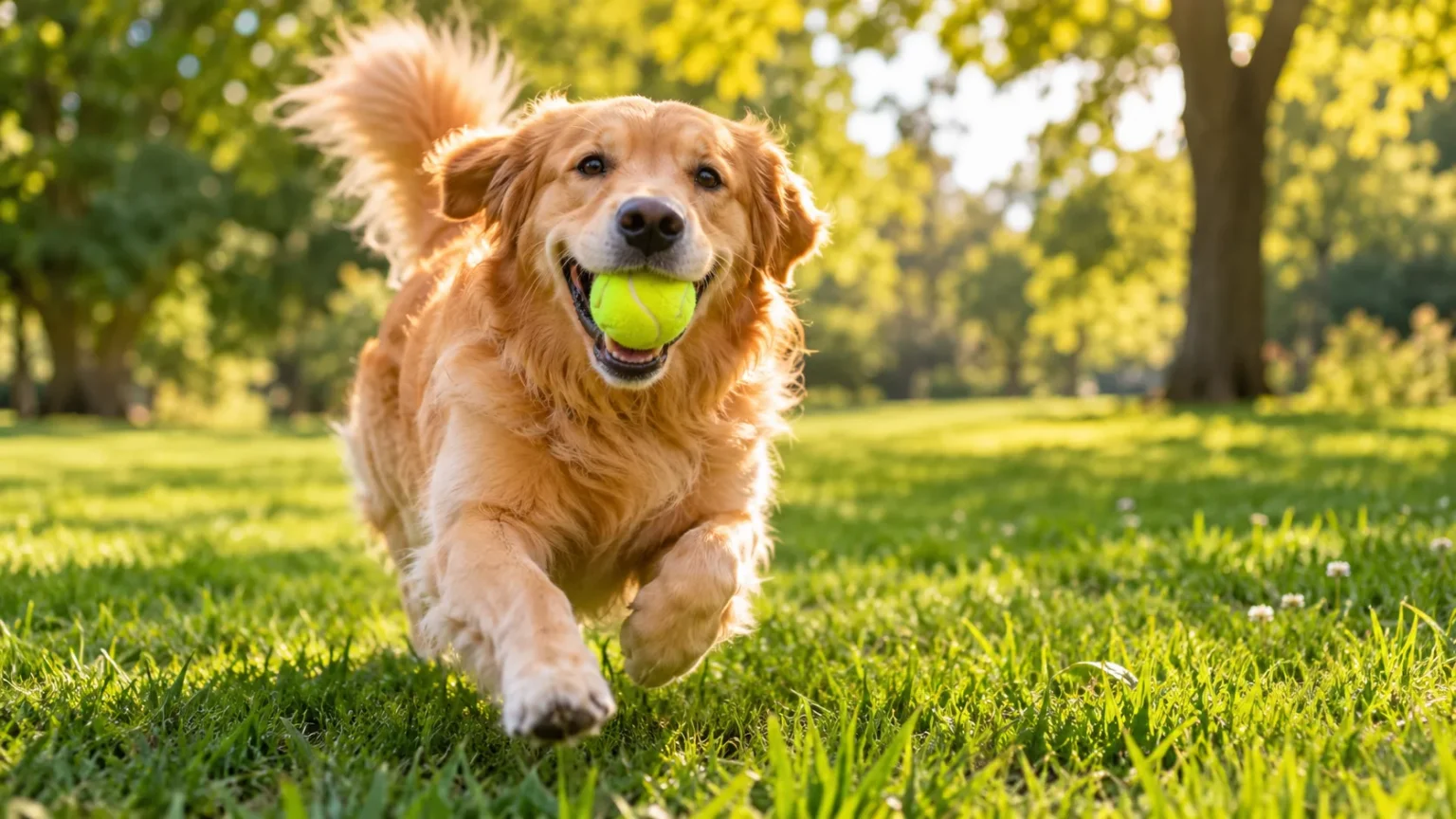
Why Do Dogs Love Tennis Balls So Much?
Many dogs become excited the moment they see a tennis ball because it combines movement, texture, sound, and play in one simple object. A bouncing ball can immediately trigger a dog’s natural interest in chasing moving things. For many pets, the ball also becomes associated with attention, exercise, and enjoyable time spent with their owner.
Tennis balls are particularly appealing because they move unpredictably when thrown or bounced. Unlike a toy that stays still, a ball can roll, jump, change direction, and disappear behind objects. These movements keep dogs mentally engaged because they must watch closely, react quickly, and decide where the ball is likely to travel next.
Another reason dogs love tennis balls is repetition. When a dog repeatedly enjoys fetching the same object, the experience becomes familiar and rewarding. Over time, simply seeing the ball can create excitement because the dog expects running, chasing, praise, and interaction to follow, making tennis-ball play one of its favorite activities.
Tennis Balls Trigger a Dog’s Natural Chase Instinct
Dogs naturally pay attention to fast-moving objects, and this instinct comes from behaviors that helped their ancestors hunt and survive. A tennis ball moving quickly across the ground can resemble small prey escaping through grass. The dog’s brain responds to movement automatically, which explains why many dogs begin running before their owner even finishes throwing the ball.
The chase itself is often more rewarding than catching the ball. Dogs experience excitement while tracking movement, changing direction, and running toward a target. Breeds developed for retrieving, herding, or hunting may show especially strong enthusiasm because generations of selective breeding strengthened behaviors related to pursuit, carrying objects, and responding to moving targets.
Even dogs that have never hunted can still display a strong chase response. Domestic life has changed how dogs use their instincts, but many natural behaviors remain deeply rooted. Playing fetch gives dogs a safe and controlled way to express these behaviors without chasing wildlife, vehicles, or other potentially dangerous moving objects.
The Bounce Makes Tennis Balls More Exciting
A major reason tennis balls are so entertaining is their unpredictable bounce. When the ball hits the ground, it may rise high, move sideways, or change speed depending on the surface. This unpredictability creates a small challenge for the dog because it cannot always predict exactly where the ball will land.
Dogs often enjoy activities that combine physical movement with mental stimulation. Watching a ball bounce forces the dog to concentrate, calculate direction, and respond quickly. This makes tennis-ball play more engaging than simply chewing on a stationary toy, especially for energetic dogs that enjoy activities requiring fast reactions and coordination.
Different surfaces can make the game even more interesting. Grass slows the ball, hard floors create sharper bounces, and uneven ground can make its path unpredictable. These small variations keep the activity fresh, which may explain why some dogs remain enthusiastic about chasing the same tennis ball hundreds of times.
The Size and Texture Feel Comfortable to Dogs
A standard tennis ball is a convenient size for many medium and large dogs to carry in their mouths. Its rounded shape makes it easy to pick up while running and simple to hold during retrieval. The soft outer covering also gives dogs something they can grip with their teeth without immediately losing control of the toy.
The fuzzy texture can provide additional sensory stimulation. Dogs explore objects through their mouths, noses, and paws, so different textures can make a toy more interesting. The felt-like surface of a tennis ball feels very different from hard plastic, rubber, wood, or metal, which may increase a dog’s curiosity and enjoyment.
However, the size of the ball should always match the individual dog. A ball that is too small may create a choking risk, particularly for large breeds with wide mouths. Owners should choose toys large enough that the dog cannot accidentally swallow them while still being comfortable enough to carry during play.
Fetch Gives Dogs Physical Exercise
Playing fetch with a tennis ball is an effective way to encourage dogs to move. Running after the ball involves sprinting, turning, stopping, and returning, which can provide more physical activity than a slow walk alone. For energetic dogs, a controlled fetch session can help use excess energy in an enjoyable and structured way.
Exercise is important because dogs that do not receive enough physical activity may become restless or frustrated. They might bark excessively, chew household objects, dig, or display other unwanted behaviors. Regular ball play can be one part of a balanced exercise routine that also includes walking, exploring, training, rest, and age-appropriate activities.
Owners should still avoid pushing dogs beyond their physical limits. Puppies, senior dogs, overweight pets, and dogs with joint problems may need shorter or gentler sessions. Watching for heavy panting, stiffness, slowing down, or reluctance to continue can help owners keep tennis-ball play fun instead of physically exhausting.
Tennis-Ball Play Provides Mental Stimulation
Dogs need mental activity as well as physical exercise, and fetch can provide both. Tracking a moving ball requires attention, visual focus, anticipation, and decision-making. When the ball disappears behind furniture or lands in long grass, the dog may also need to search using its sense of smell and problem-solving abilities.
Owners can make tennis-ball games more mentally challenging by changing how they play. Instead of always throwing the ball in a straight line, they can hide it, roll it around obstacles, or ask the dog to wait before chasing. These simple variations encourage impulse control and turn an ordinary game into a more interesting training activity.
Mental stimulation can be especially helpful for intelligent and active breeds that become bored easily. A dog that must think, search, and follow instructions is often more satisfied than one that simply runs without any challenge. Combining play with basic commands can therefore make tennis-ball sessions more rewarding and productive.
Dogs Associate Tennis Balls With Their Owners
For many dogs, the tennis ball is exciting because it represents interaction with someone they trust. The toy itself may be simple, but the game creates attention, praise, movement, and communication between dog and owner. This social connection can make fetch much more rewarding than playing alone with the same object.
Dogs are highly responsive to human behavior and quickly learn patterns. If picking up a tennis ball usually causes the owner to smile, speak excitedly, and go outside, the ball becomes connected with positive experiences. Eventually, a dog may bring the ball to its owner specifically as a way to request attention or initiate play.
These repeated interactions can strengthen the bond between dogs and their families. Playing together creates shared routines and encourages communication through body language, voice, and commands. A simple game of fetch can therefore become an important social activity that helps dogs feel engaged, included, and connected to the people around them.
Fetch Can Satisfy a Dog’s Retrieving Instinct
Some dog breeds were specifically developed to locate and retrieve objects for humans. Retrievers, spaniels, and several hunting breeds may therefore show a particularly strong desire to chase, pick up, and carry tennis balls. For these dogs, fetch can closely match behaviors they are naturally inclined to perform.
Retrieving often includes several stages: watching, chasing, capturing, carrying, and returning. A tennis-ball game can activate each of these steps in a controlled setting. Dogs may find the complete sequence highly satisfying, especially when they receive praise or another throw after successfully bringing the ball back.
Not every dog naturally returns the ball, however. Some dogs enjoy chasing but prefer to keep the object once they catch it. Owners can teach retrieval gradually by rewarding returns, trading the ball for treats or another toy, and avoiding forceful attempts to take the ball from the dog’s mouth.
The Game Creates a Rewarding Cycle
Tennis-ball play becomes highly motivating because it creates a repeated reward cycle. The dog sees the ball, becomes excited, chases it, catches it, and then experiences praise or another throw. Each successful round reinforces the dog’s desire to repeat the behavior, making the activity increasingly familiar and enjoyable.
The reward does not always need to be food. For many dogs, the next throw is already a powerful reward because they want the chase to continue. This is why some dogs immediately drop the ball at their owner’s feet and stare intensely, waiting for the game to restart.
Positive reinforcement can also help improve fetch behavior. Praising a dog for returning the ball, dropping it gently, or waiting before chasing can strengthen good habits. Over time, the dog learns that following these simple rules allows the fun to continue, which makes training feel more like play than work.
Why Some Dogs Become Obsessed With Tennis Balls
Some dogs develop an unusually strong attachment to tennis balls and may want to play constantly. High energy levels, strong retrieving instincts, excitement, and repeated reinforcement can all contribute to this behavior. If the dog repeatedly receives attention or another throw whenever it demands the ball, the pattern can become deeply established.
Strong enthusiasm is not always a problem, but owners should watch for signs that play is becoming difficult to control. A dog that cannot relax, ignores food or rest, becomes distressed when the ball disappears, or repeatedly demands play may need clearer boundaries. Constant high-intensity chasing can also place unnecessary strain on joints and muscles.
Creating balance is usually more helpful than completely removing the toy. Owners can establish specific play periods, end sessions calmly, and include other activities such as sniffing walks, training, chewing, and rest. Teaching a reliable “all done” cue can also help dogs understand when tennis-ball play has finished.
Are Tennis Balls Safe for Dogs?
Tennis balls can be enjoyable toys, but they should usually be used with supervision. Dogs that aggressively chew or destroy toys may tear the ball apart and swallow pieces of rubber or felt. Damaged balls should be removed promptly because loose material can become a choking hazard or cause digestive problems if swallowed.
Ball size is another important safety concern. Large dogs should not play with balls small enough to fit completely inside their mouths because the ball could become lodged in the throat. Choosing a larger dog-specific ball can reduce this risk while still providing the bouncing and retrieving experience the dog enjoys.
Owners should also remember that regular tennis balls were designed for sports rather than prolonged dog chewing. If a dog constantly chews the surface, a more durable dog-safe fetch toy may be a better choice. Tennis balls are best treated as interactive play objects rather than something dogs should continuously chew without supervision.
How to Make Tennis-Ball Play Better for Your Dog
A good fetch session should begin with a safe location. Open fenced areas, quiet yards, or controlled indoor spaces can reduce the risk of dogs running toward traffic or dangerous obstacles. The ground should also be appropriate for the dog’s condition, since repeated sharp turns on slippery or extremely hard surfaces may increase physical strain.
Keep sessions short enough that the dog remains enthusiastic without becoming exhausted. Several brief play periods can be better than one extremely long session, particularly in hot weather. Always provide access to fresh water and consider temperature, humidity, age, fitness level, and breed when deciding how much intense running is appropriate.
You can also make the game more varied by mixing fetch with obedience and search activities. Ask your dog to sit before the throw, hide the ball nearby, or alternate between rolling and tossing it. These changes encourage self-control and mental engagement while preventing the game from becoming nothing more than repeated high-speed chasing.
What If Your Dog Does Not Like Tennis Balls?
Not every dog finds tennis balls interesting, and that is completely normal. Dogs have individual preferences just like people, and some may prefer tug toys, squeaky toys, soft toys, food puzzles, or sniffing activities. A lack of interest in fetch does not necessarily mean that a dog is lazy or difficult to entertain.
Age, breed, personality, and previous experiences can influence toy preferences. A senior dog may prefer gentle interaction, while a scent-driven breed may enjoy searching for hidden treats more than chasing balls. Some dogs may also dislike the texture or movement of tennis balls but become excited about a different type of fetch toy.
The best approach is to observe what naturally motivates your dog. Offer several safe toys and activities without forcing participation. When owners choose games that match their dog’s personality and physical ability, play becomes more enjoyable and can provide better enrichment than insisting on an activity the dog simply does not enjoy.
Conclusion
Dogs often love tennis balls because the toys activate natural instincts while providing movement, excitement, and social interaction. Their bouncing motion encourages chasing, while their size and texture make them easy for many dogs to carry. For breeds with strong retrieving instincts, a tennis ball can be especially satisfying because the game mirrors behaviors they naturally enjoy.
Fetch also offers more than simple entertainment. It can provide physical exercise, mental stimulation, training opportunities, and valuable bonding time between dogs and their owners. When played in moderation, tennis-ball games can become an enjoyable part of a balanced routine that includes walking, sniffing, learning, chewing, social activity, and rest.
Safety should always remain part of the game. Choose an appropriately sized ball, supervise dogs that chew aggressively, replace damaged toys, and avoid excessive high-intensity exercise. When tennis-ball play is managed carefully, it can provide dogs with a rewarding way to express natural behavior while strengthening their relationship with the people they trust.
Frequently Asked Questions
Why are dogs so attracted to tennis balls?
Dogs are attracted to tennis balls because they bounce, roll, and move unpredictably. These movements trigger natural chasing instincts, while repeated games also create positive associations with exercise, attention, and time spent with their owners.
Is playing fetch with a tennis ball good for dogs?
Yes, controlled fetch can provide physical exercise, mental stimulation, and bonding time. Sessions should be appropriate for the dog’s age, health, fitness level, and environment to avoid overheating or excessive strain.
Can dogs chew tennis balls safely?
Tennis balls are better for supervised fetch than constant chewing. Dogs may damage the felt or rubber and swallow pieces, so owners should remove worn balls and consider durable dog-specific toys for heavy chewers.
Why does my dog keep bringing me a tennis ball?
Your dog may have learned that bringing the ball starts an enjoyable game. Returning it can also be part of a natural retrieving behavior and a way of asking you for attention and interaction.
Can a dog become too obsessed with tennis balls?
Yes, some dogs can become overly focused on fetch and struggle to relax when the ball is present. Setting play limits and providing other forms of exercise, enrichment, training, and rest can create healthier balance.