
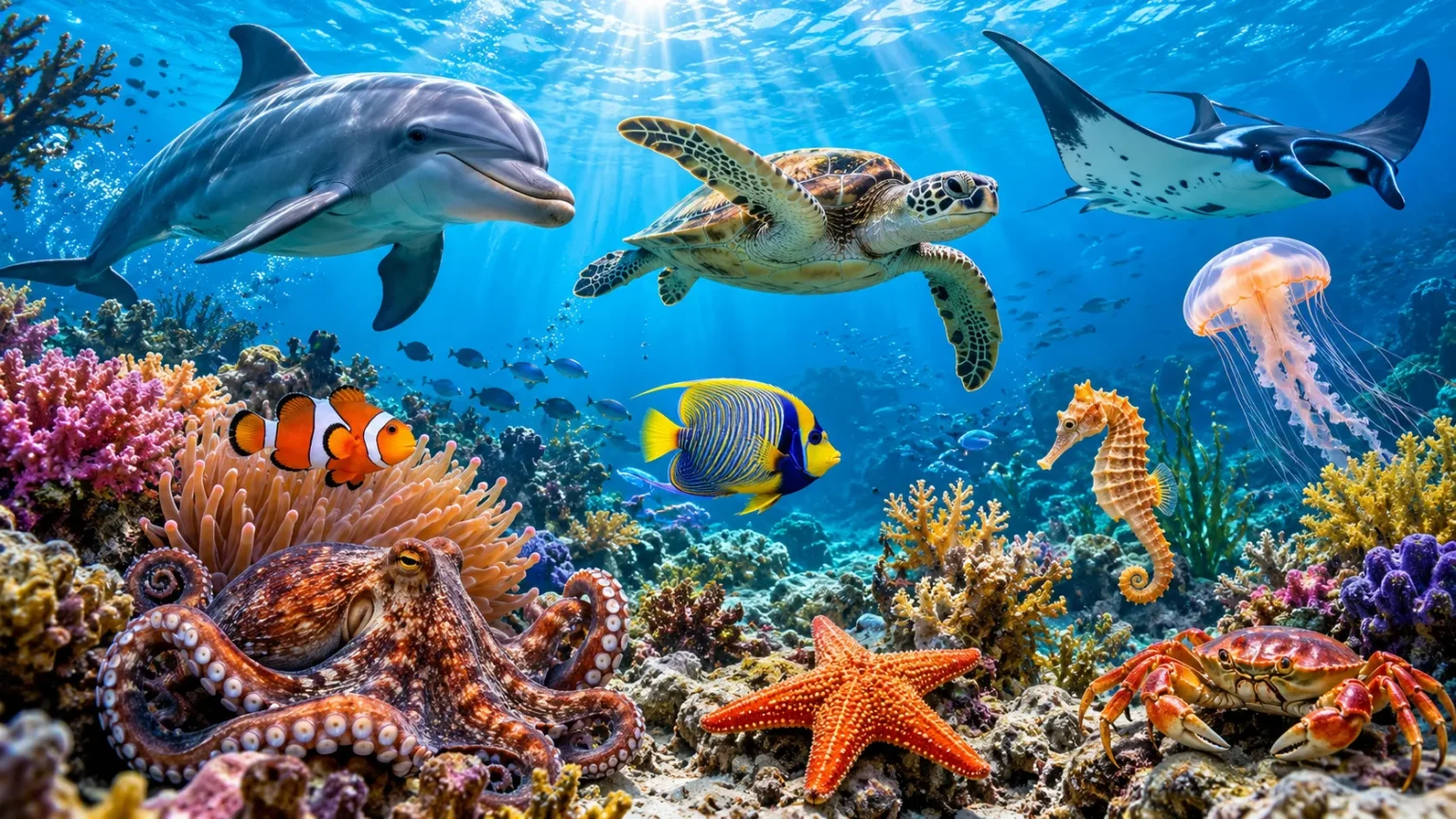
Aquatic animals are among the most fascinating living creatures on Earth, inhabiting oceans, rivers, lakes, and other water environments. From enormous whales swimming through deep oceans to colorful fish living around coral reefs, aquatic life includes an incredible variety of species. These animals have developed remarkable abilities that help them survive, find food, and reproduce in different underwater habitats.
If you’re wondering what the 10 aquatic animals are, some familiar examples include dolphins, whales, sharks, octopuses, jellyfish, sea turtles, seahorses, crabs, starfish, and clownfish. Each animal has unique characteristics, feeding habits, and environmental roles. This guide explores ten popular aquatic animals, their interesting features, natural habitats, and importance in maintaining healthy aquatic ecosystems.
What Are Aquatic Animals?
Aquatic animals are living organisms that spend all or a significant portion of their lives in water environments. These habitats include saltwater oceans, freshwater rivers, lakes, wetlands, and coastal ecosystems. Aquatic animals have different physical characteristics that help them move, breathe, feed, and survive in their particular environments.
Some aquatic animals, such as fish and many marine invertebrates, obtain oxygen from water through specialized structures. Others, including whales, dolphins, and sea turtles, breathe air and must regularly reach the surface. These differences demonstrate how animals have adapted to aquatic environments through various biological and evolutionary processes.
Aquatic animals also belong to several different biological groups rather than forming one single category. Mammals, fish, reptiles, crustaceans, and other invertebrates can all live in water. Understanding these groups makes it easier to recognize how different aquatic species survive and why they are important parts of Earth’s biodiversity.
1. Whales: The Largest Aquatic Mammals
Whales are among the most recognizable aquatic animals and include the largest species known to have lived on Earth. The blue whale, for example, can reach extraordinary lengths and weighs far more than most other animals. Despite living entirely in water, whales are mammals that breathe air through lungs rather than extracting oxygen through gills.
Whales inhabit oceans around the world, although their geographical ranges differ depending on the species. Some feed by filtering small marine organisms from seawater, while toothed whales hunt fish, squid, or other prey. Their feeding habits and seasonal movements help shape relationships between different species throughout marine ecosystems.
Another fascinating characteristic of whales is their ability to communicate through underwater sounds. Certain species produce complex vocalizations that can travel considerable distances through seawater. Researchers study these sounds to understand whale behavior, social interactions, and movement patterns, making whales especially interesting examples of marine mammal diversity.
2. Dolphins: Intelligent and Social Sea Animals
Dolphins are marine mammals recognized for their streamlined bodies, playful behavior, and complex social interactions. They belong to the toothed whale group and are closely related to other cetaceans. Many dolphin species live in coastal waters or open oceans, while some inhabit freshwater river systems.
Dolphins use sound for communication and, in many species, echolocation to locate objects and navigate underwater environments. Echolocation involves producing sounds and interpreting returning echoes to gather information about the surroundings. This biological ability can help dolphins locate prey, recognize nearby objects, and move through water when visibility is limited.
Many dolphins live in social groups and demonstrate coordinated behaviors during feeding and other activities. Their communication and interactions have attracted considerable scientific interest because they reveal complex relationships within marine mammal communities. However, dolphins remain wild animals, and people should observe them responsibly without disturbing their natural activities or habitats.
3. Sharks: Powerful Predators of the Ocean
Sharks are fascinating aquatic animals known for their streamlined bodies, strong swimming abilities, and important roles in marine food webs. Unlike most familiar bony fish, sharks have skeletons made primarily of cartilage. Different shark species vary greatly in size, appearance, behavior, and the environments they inhabit.
Some sharks actively hunt fish, marine mammals, or other prey, while species such as whale sharks feed by filtering small organisms from water. Their sensory systems help them detect changes in their surroundings and locate potential food sources. Many shark species play important ecological roles by influencing populations and interactions among marine animals.
Although sharks are frequently portrayed as dangerous, most species do not pose a significant threat to people. Many shark populations face challenges involving overfishing, accidental capture, and habitat degradation. Protecting sharks is important because removing key predators can alter the balance of marine ecosystems and affect other species.
4. Octopuses: Intelligent Animals With Eight Arms
Octopuses are remarkable marine invertebrates known for their eight flexible arms, soft bodies, and unusual problem-solving abilities. Unlike animals with rigid external shells, most octopuses can move through surprisingly narrow spaces. Their flexible anatomy allows them to explore complex underwater environments and reach sheltered areas while searching for food.
Many octopus species can change their skin color and appearance using specialized cells and muscles. These abilities help them blend into rocks, coral, and other surroundings while avoiding predators or approaching prey. Octopuses also use their arms and sensitive suckers to examine objects, locate food, and interact with their environment.
Octopuses generally feed on animals such as crabs, mollusks, and other marine creatures, depending on the species. Many are solitary and spend considerable time in sheltered spaces on the seafloor. Their sophisticated nervous systems and adaptable behavior make them important subjects for scientists studying animal intelligence and underwater survival strategies.
5. Jellyfish: Beautiful Creatures That Drift Through Water
Jellyfish are aquatic invertebrates recognized for their soft, gelatinous bodies and flowing tentacles. They have existed in Earth’s oceans for hundreds of millions of years and occur in many marine environments. Their unusual body structures allow them to move through water using rhythmic contractions, although currents strongly influence their movement.
Most familiar jellyfish belong to a group of animals called cnidarians, which also includes sea anemones and corals. Many possess specialized stinging cells that help capture small prey or provide protection. Their diets often include tiny marine organisms, plankton, and other animals encountered while moving through the water.
Jellyfish vary considerably in size, color, and the strength of their stings. Some species cause relatively mild discomfort when touched, while others can be dangerous to humans. Observing jellyfish from a safe distance is important, especially when visiting unfamiliar beaches or coastal waters where potentially harmful species may occur.
6. Sea Turtles: Reptiles That Travel Across Oceans
Sea turtles are aquatic reptiles that spend most of their lives swimming through marine environments. Their streamlined shells and powerful flippers help them travel considerable distances through ocean waters. Unlike fish, sea turtles breathe air through lungs and must periodically return to the surface.
Different sea turtle species have specialized diets that may include seagrass, jellyfish, sponges, or other marine organisms. Some species migrate long distances between feeding habitats and nesting areas. Female sea turtles generally return to sandy beaches to lay their eggs, connecting their marine lives with important coastal environments.
Sea turtles face environmental challenges involving fishing equipment, plastic pollution, coastal development, and habitat loss. Artificial lighting near nesting beaches can also interfere with the natural movement of hatchlings toward the sea. Protecting nesting areas and reducing ocean pollution can help support the survival of these remarkable marine reptiles.
7. Seahorses: Small Fish With Unique Body Shapes
Seahorses are unusual aquatic animals recognized for their upright swimming posture and horse-shaped heads. Although their appearance differs considerably from most familiar fish, seahorses belong to the fish group and breathe through gills. They typically inhabit sheltered coastal environments such as seagrass beds, mangrove habitats, and coral reefs.
One interesting seahorse feature is its flexible, grasping tail, which can hold onto underwater plants and other suitable structures. This helps the animal maintain its position in habitats where water movement may otherwise carry it away. Seahorses also use their long snouts to capture small prey such as tiny crustaceans.
Another remarkable characteristic of seahorses involves reproduction, because males carry developing eggs inside specialized brood pouches. After the young develop, the male releases them into the surrounding water. This unusual reproductive behavior makes seahorses fascinating examples of the diversity found among marine fish.
8. Crabs: Crustaceans Found in Aquatic Habitats
Crabs are crustaceans that inhabit oceans, freshwater environments, and coastal areas around the world. They are recognizable by their protective external skeletons, jointed legs, and claws found in many species. Although their appearance varies, most true crabs have five pairs of legs, with the front pair typically modified into claws.
Crabs use their limbs for walking, handling food, and interacting with their surroundings. Their diets vary widely, with different species feeding on algae, small animals, organic material, or a combination of food sources. Many crabs play important roles in recycling nutrients and transferring energy through aquatic food webs.
As crabs grow, they must periodically shed their hard outer skeleton through a process called molting. This allows their bodies to increase in size before a new protective covering hardens. Crabs also demonstrate considerable habitat diversity, from deep marine environments to tidal shorelines and freshwater ecosystems.
9. Starfish: Unique Animals That Live on the Seafloor
Starfish, more accurately called sea stars, are marine invertebrates known for their distinctive body shapes. Many species have five arms extending from a central body, although some have considerably more. Despite their common name, sea stars are not fish because they belong to the echinoderm group.
Sea stars move using numerous small structures called tube feet, which operate through a specialized water vascular system. These structures help them travel across the seafloor and interact with surrounding surfaces. Many sea stars feed on mollusks or other small marine animals, although feeding habits differ between species.
Some sea star species can regenerate damaged or lost arms, making them especially interesting to scientists studying biological repair. However, their ability to regenerate varies, and handling them can cause unnecessary stress or injury. Sea stars are important members of marine communities, where their feeding activities can influence relationships between other seafloor organisms.
10. Clownfish: Colorful Fish Living Around Coral Reefs
Clownfish are small, colorful marine fish commonly associated with warm tropical waters and coral reef environments. Their bright orange, white, or other distinctive markings make them recognizable among reef animals. They are especially interesting because of their close relationship with certain species of sea anemones.
Clownfish live among the tentacles of suitable sea anemones, which can provide protection from many predators. Specialized adaptations, including their protective mucus coating, help them avoid being stung by their host anemones. In return, clownfish may help their hosts through activities such as removing debris and contributing nutrients.
Another fascinating feature of clownfish is their unusual social and reproductive system. They live in groups with a dominant breeding female, and individuals can change sex as part of their natural life cycle. Their colorful appearance and distinctive behavior make clownfish popular examples when learning about aquatic animal adaptations and coral reef ecosystems.
Why Are Aquatic Animals Important to the Environment?
Aquatic animals help maintain the balance of ecosystems by participating in complex food webs and ecological relationships. Predators influence prey populations, while smaller organisms provide food for larger animals. These interactions help support the movement of energy and nutrients throughout freshwater and marine environments.
Different aquatic animals also contribute to maintaining healthy habitats through feeding, movement, and other natural activities. Certain animals influence the growth of underwater vegetation, while others recycle organic material or shape relationships between species. The ecological importance of each animal depends on its habitat, food sources, and interactions with surrounding organisms.
Unfortunately, aquatic ecosystems face growing pressure from pollution, climate change, habitat destruction, and unsustainable fishing practices. These challenges can affect animal populations and disrupt important ecological relationships. Protecting water quality, reducing unnecessary pollution, and supporting responsible conservation efforts can help preserve aquatic biodiversity for future generations.
Conclusion
Aquatic animals include an extraordinary variety of species that live in oceans, rivers, lakes, and other water environments. Whales, dolphins, sharks, octopuses, jellyfish, sea turtles, seahorses, crabs, starfish, and clownfish are ten fascinating examples of aquatic life. Each animal has distinctive characteristics that help it survive in its natural habitat.
These animals represent different biological groups, including mammals, fish, reptiles, and invertebrates. Some breathe air, while others obtain oxygen from water through specialized structures. Their feeding habits, movement patterns, and survival adaptations demonstrate the remarkable diversity of life found throughout aquatic ecosystems.
Understanding aquatic animals helps us appreciate their ecological importance and the environmental challenges they face. Healthy water habitats support complex relationships between animals, plants, and other living organisms. By learning about aquatic species and supporting responsible environmental practices, we can help protect the diversity of life beneath the water’s surface.
Frequently Asked Questions (FAQs)
What are the 10 most common aquatic animals?
Ten familiar aquatic animals are whales, dolphins, sharks, octopuses, jellyfish, sea turtles, seahorses, crabs, starfish, and clownfish. These examples represent different marine animal groups, although their populations and distributions vary widely.
What are aquatic animals in simple words?
Aquatic animals are animals that live in water for all or a significant part of their lives. They inhabit oceans, rivers, lakes, wetlands, and other freshwater or saltwater environments.
What are five examples of freshwater aquatic animals?
Five examples of freshwater aquatic animals include catfish, goldfish, freshwater turtles, river otters, and freshwater crayfish. These animals inhabit rivers, lakes, ponds, or other freshwater environments, depending on the species.
What is the difference between aquatic and terrestrial animals?
Aquatic animals live in water for all or much of their lives, while terrestrial animals primarily inhabit land environments. Their body structures and survival adaptations reflect their different habitats.
Which is the largest aquatic animal in the world?
The blue whale is the largest known aquatic animal and the largest animal known to have lived on Earth. It is a marine mammal that breathes air and feeds primarily on krill.